
Sports Betting Terminology and Odds Explained
March 24, 2026
Lottery Jackpots Tonight
March 25, 2026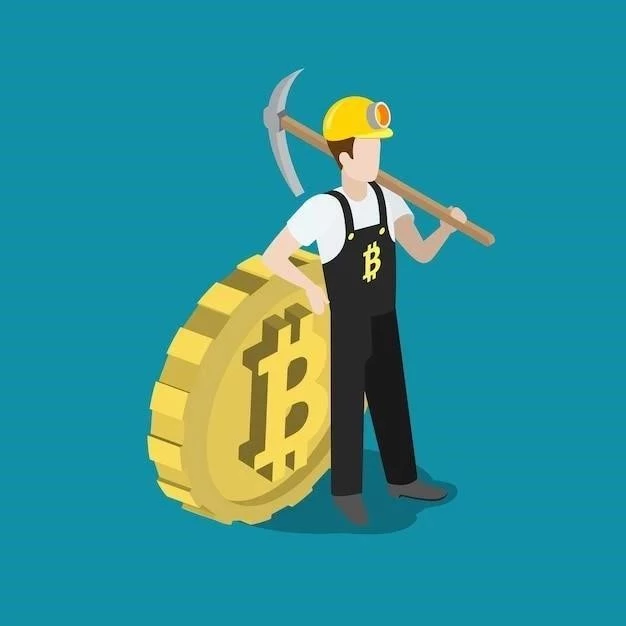
Bitcoin mining is a fundamental process securing the network and introducing new bitcoins․ Miners compete to solve complex cryptographic puzzles, adding new blocks of verified transactions to the blockchain․ Successful miners receive a substantial block reward (currently 6․25 BTC) plus transaction fees․ While most miners join large, collaborative mining pools for consistent, smaller payouts, “lottery mining” (solo mining) offers a distinct, high-risk, and astronomically unlikely chance at the entire block reward․ This article explores what lottery mining entails, its history, current viability, and why it lives up to its name․
Understanding Bitcoin Mining Fundamentals
At its core, Bitcoin mining is a “proof-of-work” mechanism․ Miners utilize specialized hardware to repeatedly guess a specific number, known as a nonce․ When this nonce is combined with other block data and subjected to a cryptographic hashing algorithm (SHA-256), the resulting hash must fall below a predetermined target difficulty․ This arduous computational effort validates pending transactions and adds a new block to the immutable blockchain․ The first miner to successfully discover such a hash broadcasts their solution to the network, and if validated by other nodes, they earn the right to publish the new block and claim the associated block reward․
What Exactly is Lottery Mining?
Lottery mining refers specifically to an individual miner’s attempt to find a Bitcoin block entirely independently, without pooling their computational resources with others․ Instead of contributing their hash power to a collective group and receiving a proportional share of rewards based on their contribution, a solo miner operates under an all-or-nothing premise․ Should they be the one fortunate enough to solve the cryptographic puzzle for a new block, they receive the entire block reward (6․25 BTC) and all associated transaction fees․ Conversely, if they fail to find a block over extended periods, they receive absolutely nothing, bearing all operational costs themselves․ This high-stakes, low-probability scenario is the essence of why it’s aptly termed “lottery mining․”
A Glimpse into History: When Solo Mining Was Viable
In Bitcoin’s nascent stages, particularly during its early years (2009-2012), the network’s overall hash rate was significantly lower, and the mining difficulty was far more manageable․ During this era, solo mining using conventional CPUs and later GPUs was not only feasible but often profitable for individuals․ A single computer could realistically find blocks․ However, the landscape dramatically shifted with the introduction and widespread adoption of Application-Specific Integrated Circuits (ASICs) in the early 2010s․ These specialized devices are purpose-built for Bitcoin’s SHA-256 hashing algorithm, offering efficiency orders of magnitude greater than general-purpose hardware․ This technological leap led to an exponential surge in the network’s total hash rate and, consequently, its mining difficulty․ Solo mining, for all but the largest entities, quickly became a statistical impossibility, giving rise to the dominance of mining pools as the only pragmatic approach for most participants․
The Astronomical Odds Against Solo Miners
The probability of a solo miner successfully finding a block is directly proportional to their fraction of the total Bitcoin network hash rate․ Today, the Bitcoin network’s hash rate is measured in exahashes per second (EH/s), representing billions of billions of hashes every second․ Even a powerful, state-of-the-art individual ASIC miner (e․g․, capable of 100 terahashes per second, TH/s) contributes an infinitesimally small percentage to this colossal global effort․ For instance, if the network hash rate is 500 EH/s, a 100 TH/s miner possesses merely 0․00000002% of the total hash power․ Statistically, such a miner would, on average, need to operate continuously for millions of years to expect to find a single block․ These odds underscore the “lottery” aspect; it’s an almost insurmountable statistical challenge․
Why Do Individuals Still Engage in Lottery Mining?
Despite the overwhelming improbability, a small segment of the mining community continues to pursue lottery mining․ Several factors contribute to this enduring, albeit niche, appeal:
- The Allure of the Full Reward: The prospect of receiving the entire current block reward (worth hundreds of thousands of dollars at recent prices) is a powerful, almost irresistible motivator for some․
- Misunderstanding of Current Difficulty: Some individuals, particularly newcomers or those less informed about the network’s current scale, may not fully grasp just how astronomically difficult solo mining has become․
- Access to Extremely Cheap Electricity: For miners with access to virtually free or exceptionally low-cost electricity, the ongoing operational expense is significantly reduced, transforming the venture into a pure gamble with minimal financial downside beyond the initial hardware investment․
- Hobbyist or Experimental Interest: A few hobbyists enjoy the technical challenge or the unique satisfaction of attempting to solo mine, viewing it less as a profit-driven enterprise and more as an engaging experiment․
- Large-Scale Solo Operations: Very large mining farms that possess substantial aggregate hash power might, in effect, operate as solo miners․ While still a gamble, their scale makes it statistically more viable over extended periods, although even these entities often opt for pools to ensure more consistent returns․
The Stark Financial Reality
For the vast majority of individual miners, lottery mining is a financially precarious, if not ruinous, endeavor․ The continuous electricity consumption required to power high-performance ASICs, coupled with the near-certainty of not finding a block for extended periods, leads to rapidly accumulating operational costs without any corresponding revenue․ The initial significant capital investment in mining hardware compounds this financial risk․ In contrast, mining pools offer a far more pragmatic and sustainable approach, providing smaller, yet frequent and predictable, payouts․ These consistent rewards enable miners to reliably cover their electricity bills, maintain their equipment, and generate a steady income, making them the default choice for serious miners․
Rare Tales of Solo Success
While exceedingly rare, the occasional success story of a solo miner beating the astronomical odds fuels the persistent dream․ In 2022, a solo miner operating with a comparatively modest hash rate of approximately 126 terahashes per second (TH/s) – a minuscule fraction of the global network – famously managed to find a Bitcoin block․ This incredible stroke of luck resulted in them receiving the full 6․25 BTC reward․ Such instances, while providing inspiring anecdotes, serve as powerful reminders of just how exceptional and statistically improbable these events are, underscoring the lottery-like nature of the pursuit․
Lottery mining Bitcoin is a romantic, almost nostalgic, concept that harkens back to the network’s pioneering days․ In the present era, characterized by hyper-competitive mining, advanced ASIC technology, and an immense global hash rate, it represents an endeavor with astronomically low chances of success for the average individual․ While the alluring prospect of claiming the entire block reward is undeniably powerful, the cold, hard financial reality overwhelmingly points towards participation in mining pools as the only sensible and sustainable path for modern Bitcoin mining․ For most, solo mining remains an exceptionally expensive, high-stakes gamble where the “house” – the collective power of the entire Bitcoin network – almost invariably triumphs․ It stands as a testament to hope against overwhelming odds, but fundamentally, it is a lottery where nearly all tickets, for individual participants, inevitably turn out to be losers․