

Slot Machines Evolution Mechanics and Types
February 18, 2026
The Ultimate Guide to 32Red Slots
February 19, 2026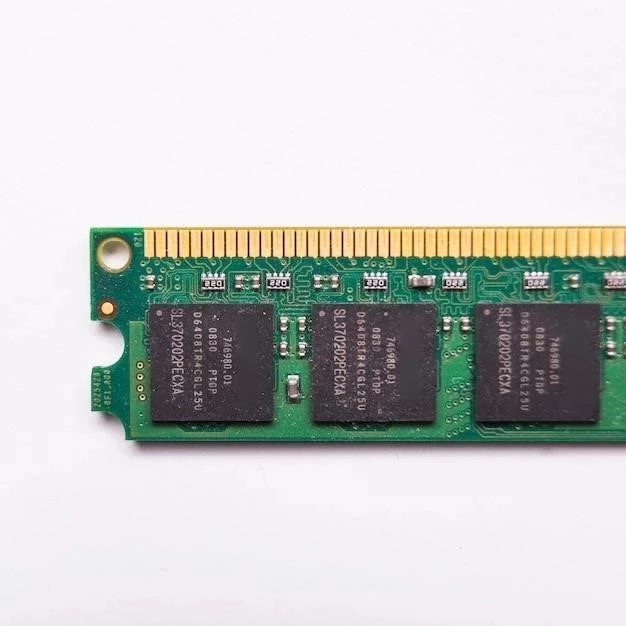
In PC building, understanding memory configuration is crucial for performance and future-proofing. The ‘4 RAM slots 2 sticks’ setup is a popular choice for mainstream users and enthusiasts, offering a blend of speed, upgradeability, and cost-effectiveness. This article explores why this arrangement is the sweet spot, covering principles, installation, and benefits for gaming and content creation.
Modern motherboards often feature four RAM slots. While filling all slots seems intuitive, installing just two sticks is frequently recommended, especially for new builds. This strategy leverages dual-channel memory mode, providing an immediate performance boost, room for expansion, and a stable environment for your system’s Integrated Memory Controller (IMC).
RAM and Motherboard Architecture Basics
What is RAM?
RAM (Random Access Memory) is volatile memory storing temporary data for quick CPU access. It’s faster than storage devices, acting as the CPU’s workspace. More RAM allows more simultaneous tasks. Beyond quantity, RAM speed and configuration significantly impact overall system performance.
DIMM Slots and Memory Channels
RAM modules are DIMMs (Dual In-line Memory Modules). Motherboards typically have two or four DIMM slots, organized into memory channels:
- Single-Channel: One 64-bit data pathway. Slowest.
- Dual-Channel: Two independent 64-bit pathways (128-bit bus). Doubles theoretical bandwidth. Most consumer CPUs (Intel Core, AMD Ryzen) support dual-channel.
- Quad-Channel: Four independent 64-bit pathways (HEDT platforms).
Dual-channel is standard and most beneficial for most users. A ‘4 RAM slots 2 sticks’ setup aims to properly engage this mode.
Why Four RAM Slots? Future-Proofing
Four RAM slots offer significant advantages for scalability and longevity:
Future-Proofing & Capacity
Four slots allow easy memory upgrades without replacing initial RAM. Start with 16GB (2x8GB), then easily upgrade to 32GB by adding another 2x8GB kit. This is more cost-effective than replacing RAM entirely. Motherboards with four DIMM slots also support higher maximum total RAM capacity, accommodating 16GB or 32GB sticks for 64GB or 128GB total on many mainstream platforms.
Advantages of Using Two RAM Sticks
Having four slots offers potential; using two sticks optimizes immediate performance and stability.
Dual-Channel Performance
Installing two RAM sticks into correct, paired slots enables dual-channel memory mode, doubling memory bandwidth. This significantly impacts memory-intensive tasks:
- Gaming: Improves minimum frame rates and smoothness, especially in CPU-bound games or with integrated graphics (APUs, Intel Xe).
- Content Creation: Speeds up video editing, 3D rendering, graphic design, and large project loading.
- Multitasking: System feels more responsive with multiple applications and browser tabs.
Single-channel mode bottlenecks your CPU; dual-channel ensures efficient data flow.
Cost-Effectiveness & Stability
2-stick kits (e.g., 2x8GB) are often more cost-effective and factory-tested for seamless operation at advertised speeds. This avoids compatibility issues compared to mixing individual sticks. Running two sticks also places less stress on the CPU’s Integrated Memory Controller (IMC) than four, especially at higher speeds, leading to greater stability and easier achievement of XMP/DOCP speeds.
Installation: Getting Dual-Channel Right
Correct slot placement is crucial for dual-channel performance. Incorrect placement results in slower single-channel mode.
Motherboard Manual is Key
Always consult your motherboard’s user manual. It’s the definitive guide for dual-channel slot population. While common patterns exist, manufacturer recommendations vary.
Slot Numbering and Color Coding
DIMM slots are labeled (e.g., A1, A2, B1, B2) and often color-coded. For two sticks, populate slots belonging to different channels but the same pair within those channels.
Most common configuration: Slots A2 and B2 (or slots 2 and 4). These are often the second and fourth slots from the CPU, providing better signal integrity. If color-coded, use slots of the same color, ensuring they are the correct pair (e.g., second grey and second black slot corresponding to A2/B2).
Step-by-Step Installation
- Power Down: Shut down PC, unplug from power.
- Open Case: Remove side panel.
- Locate Slots: Identify four RAM slots, usually right of CPU.
- Consult Manual: Pinpoint recommended slots (e.g., A2 and B2).
- Open Clips: Push open retention clips on chosen slots.
- Align Module: Align RAM notch with slot key.
- Insert Firmly: Apply even pressure until it clicks and clips snap shut.
- Repeat: Install second stick in the second recommended slot.
- Verify: Double-check both sticks are fully seated, clips closed.
- Power On & Verify: Close case, power on. Check BIOS/UEFI (memory info) and OS (Task Manager/CPU-Z) for correct RAM amount and dual-channel mode.
Performance Gains and Real-World Impact
Dual-stick configuration significantly impacts various computing tasks:
Gaming & Content Creation
Gamers see improved minimum frame rates and smoother gameplay, especially with CPU-intensive games or integrated graphics (APUs, Intel Iris Xe). Professionals in video editing, 3D rendering, graphic design, and virtual machines benefit from faster encoding, rendering, and loading times. Multitasking and general office tasks also feel snappier due to faster application loading.
Challenges and Advanced Considerations
While effective, be aware of these points:
Incorrect Slot Populating
This is the most common mistake, leading to single-channel mode and negating performance benefits. Always verify in BIOS/UEFI.
XMP/DOCP Profiles
Enable XMP (Intel) or DOCP (AMD) in BIOS/UEFI to achieve advertised RAM speeds. Failing to do so runs RAM at slower base speeds (e.g., DDR4-2133), leaving performance untapped.
CPU IMC Limitations
Using two sticks is stable. Upgrading to four can strain the CPU’s Integrated Memory Controller (IMC), potentially reducing stability or hindering extremely high speeds (DDR4-3600+, DDR5-6000+) without manual voltage adjustments. Check motherboard’s QVL (Qualified Vendor List) for 4-DIMM configurations if pushing speeds.
Mixing RAM Modules
When adding more RAM, always purchase modules identical to your existing ones (same brand, model, speed, timings). Mixing different modules can cause instability or force all RAM to run at the slowest stick’s specifications.
Upgrading to Four Sticks: What to Know
The ‘4 RAM slots 2 sticks’ setup provides an easy upgrade path:
Matching RAM is Key
For stability, buy an identical 2-stick kit to your existing one. Exact part numbers are ideal. Buying a 4-stick kit initially is even better if you know you’ll need full capacity.
Potential for Reduced Stability/Speed
Populating all four slots can strain the IMC. You might need to slightly reduce memory clock speed or increase DRAM voltage for stability with four sticks, especially at very high frequencies. This is less common at moderate speeds. Always perform stability tests (e.g., MemTest86) after RAM changes.
The ‘4 RAM slots 2 sticks’ configuration is an exceptionally well-balanced approach. It combines immediate dual-channel performance benefits with strategic future upgradeability. Starting with two quality modules in a four-slot motherboard provides superior memory bandwidth for demanding applications and games, ensuring a responsive system from day one. It also retains invaluable flexibility to easily double RAM capacity later.
This setup is about smart planning: a more stable platform for the IMC, easier XMP/DOCP achievement, and often more cost-effective. Prioritize correct dual-channel configuration. Always consult your motherboard’s manual for precise instructions and enable XMP/DOCP in BIOS to unleash full potential. This configuration ensures a powerful, adaptable, and future-ready PC.