
Lucky Fish Betting Registration Guide
February 4, 2026
How Many Slots Are in a Double Chest in Minecraft
February 5, 2026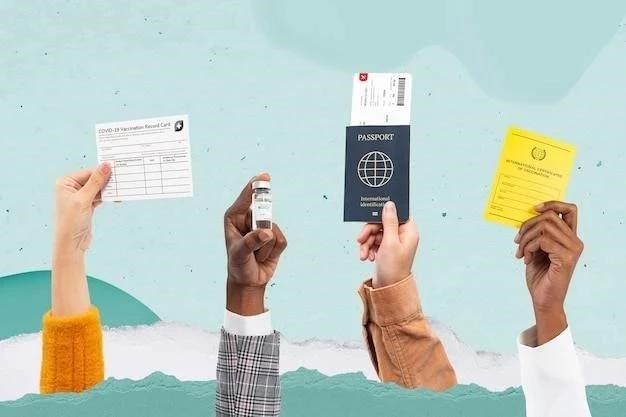
The Diversity Visa (DV) Lottery provides a unique, annual opportunity for individuals globally to obtain U.S. permanent residency, a Green Card. This program aims to diversify the immigrant population, granting up to 50,000 visas to selected applicants from countries with historically low immigration rates to the United States. It offers a life-changing pathway to live and work in America, fostering new beginnings.
Eligibility Requirements for the Lottery
To participate in the Diversity Visa (DV) Lottery, applicants must meet specific, non-negotiable criteria established by the U.S. government. Foremost among these is the requirement that the applicant be a native of a country with historically low rates of immigration to the United States. The list of eligible countries is updated annually, and individuals born in countries that have sent more than 50,000 immigrants to the U.S. in the previous five years are typically excluded. However, there are exceptions: if an applicant was born in an ineligible country but their spouse was born in an eligible country, the applicant may claim their spouse’s country of birth. Similarly, if an applicant was born in an ineligible country but neither of their parents was a resident of that country at the time of their birth (e.g., they were merely visiting or working temporarily), the applicant may claim the country of birth of one of their parents.
Beyond the country of nativity, educational or professional qualifications are paramount. Each principal applicant must possess either a high school education or its equivalent, defined as successful completion of a 12-year course of elementary and secondary education in the United States or a comparable foreign course of study. This means having successfully completed primary and secondary education. Alternatively, applicants may qualify by having two years of work experience within the last five years in an occupation that requires at least two years of training or experience to perform. The U.S. Department of Labor’s O*Net Online database is utilized to determine qualifying occupations, ensuring that the work experience meets specific standards. It is crucial that the work experience is in an occupation designated as Job Zone 4 or 5, with a Specific Vocational Preparation (SVP) rating of 7.0 or higher. Carefully reviewing one’s educational background or work history against these strict definitions is essential before applying, as failing to meet either standard will result in disqualification, even if selected in the lottery. There are no age restrictions to apply, but the education or work experience requirements effectively mean applicants must be at least 18 years old to meet the criteria.
Applicants must also ensure that all information provided in their entry is accurate and complete. Any misrepresentation or omission of material facts can lead to disqualification at any stage of the process, including during the interview or even after visa issuance. While criminal records are not an explicit disqualifier for application submission, certain serious offenses can impact eligibility during the later visa interview stage. It is important to understand that meeting these initial eligibility requirements does not guarantee selection, but rather qualifies an individual to be entered into the random drawing for the lottery. Each family member included in the application must also generally meet relevant criteria, particularly regarding the country of nativity if claiming derivatives. The integrity of the application hinges on strict adherence to these guidelines.
The Application Process: Step-by-Step
The Diversity Visa (DV) Lottery application is an entirely electronic procedure, conducted annually during a specific, limited registration period, generally in the fall. Submissions must occur exclusively through the official U.S. Department of State website, dvprogram.state.gov, to prevent fraud. The first critical step involves gathering accurate personal details for yourself, your spouse, and all unmarried children under 21. This includes full names, dates and places of birth, and gender. Precise information is essential; any significant errors can lead to disqualification from the program.
Subsequently, recent digital photographs for yourself, your spouse, and each child are required. These photos must strictly adhere to specific technical requirements concerning size, background, head position, and resolution, consistent with U;S. visa photo standards. Photos older than six months are typically unacceptable. Submitting non-compliant photographs is a very frequent reason for invalidating entries. After compiling all necessary data and ensuring photo compliance, applicants proceed to complete and submit the online entry form (DS-5501). The form, while straightforward, demands meticulous attention to every single detail.
Upon successful submission, a unique confirmation number is generated; This number is absolutely vital, acting as the exclusive method to check your entry status and ascertain selection in the random drawing. You must immediately print and securely save this confirmation number, as it is irreplaceable if lost. Crucially, there is no fee to submit a DV Lottery entry; any request for payment at this initial stage signifies a scam. Furthermore, submitting multiple entries per principal applicant will result in automatic disqualification of all entries. Strict adherence to these instructions is indispensable for a valid and considered application.
After Selection: Interview and Visa Issuance
Upon notification via the online Entrant Status Check, using their unique confirmation number, selected DV Lottery applicants must proceed with the detailed immigrant visa application. The first key step is to complete the electronic DS-260 Immigrant Visa and Alien Registration Application. This form demands comprehensive biographical, family, and background details for the principal applicant and all included family members. Accuracy is critical; any inconsistencies with the initial DV entry or subsequent documents risk disqualification.
Next, applicants must meticulously gather all necessary supporting documents for the consular interview. These typically encompass valid passports for all individuals, original birth certificates, marriage certificates (if applicable), divorce decrees, and police certificates from countries of residency since age 16. Evidence of military service and documentation proving fulfillment of the DV program’s education or work experience requirements are also essential. Financial documentation, such as bank statements or an Affidavit of Support, demonstrating the applicant will not become a public charge, is generally required.
A mandatory medical examination by an authorized panel physician is prerequisite to the interview. This exam ensures health compliance with U.S. immigration standards; results are sent directly to the embassy. Interview appointments are scheduled by the Kentucky Consular Center (KCC) based on case number availability and annual visa limits. Regularly checking the Entrant Status Check for appointment notifications is vital.
During the consular interview, a U.S. Consular Officer will review all submitted materials, verify DS-260 information, and ask questions to confirm DV eligibility. The officer ensures all legal requirements are met, including education/work criteria, and verifies the applicant’s admissibility to the U.S. If approved, after paying the immigrant visa fee, the visa is stamped into the applicant’s passport. A sealed visa packet, for presentation to Customs and Border Protection upon U.S. entry, is also provided. The visa expires, usually six months from the medical exam, requiring entry before that date to pave the way for Green Card issuance.
Life in the U.S. as a Green Card Holder
Obtaining a Green Card through the Diversity Visa Lottery marks the beginning of a new chapter, granting individuals the right to live and work permanently anywhere in the United States. This status, also known as lawful permanent residency, comes with a host of benefits and responsibilities that shape one’s life in America. Green Card holders enjoy the freedom to pursue employment opportunities across various industries without the need for additional work visas, significantly expanding their professional horizons. They can reside in any state or city, choosing a location that best suits their personal and career aspirations, from bustling metropolises to serene rural areas. The stability provided by permanent residency allows for long-term planning, including purchasing property, establishing businesses, and building a family life.
Access to public services and social programs is another significant advantage. Green Card holders are generally eligible for in-state tuition at public colleges and universities after meeting residency requirements, making higher education more affordable. They can apply for federal financial aid for schooling. Furthermore, they become eligible for Social Security benefits upon retirement, provided they have worked and contributed to the system for a sufficient period. Access to healthcare services, while not automatically free, is facilitated, and they can participate in various insurance programs available to residents. The ability to obtain a U.S. driver’s license, open bank accounts, and apply for credit cards further integrates them into the American economic system, providing essential tools for daily life.
While enjoying extensive rights, Green Card holders also have clear responsibilities; They must obey all U.S. laws, pay federal, state, and local taxes, and register with the Selective Service if they are male and between the ages of 18 and 25. Maintaining continuous residency in the U.S. is crucial; extended absences abroad can lead to questions about their intent to reside permanently and potentially jeopardize their status. Re-entry permits can be obtained for planned long trips. Although they cannot vote in federal elections, they can participate in certain local elections depending on the jurisdiction. Perhaps one of the most significant long-term benefits is the pathway to U.S. citizenship. After five years of continuous permanent residency (or three years if married to a U.S. citizen), Green Card holders may apply for naturalization, provided they meet all eligibility criteria, including demonstrating good moral character and passing a civics and English test. This transition to citizenship grants full political rights and strengthens ties to the nation. This new life requires adaptation and understanding of the American legal and social framework.